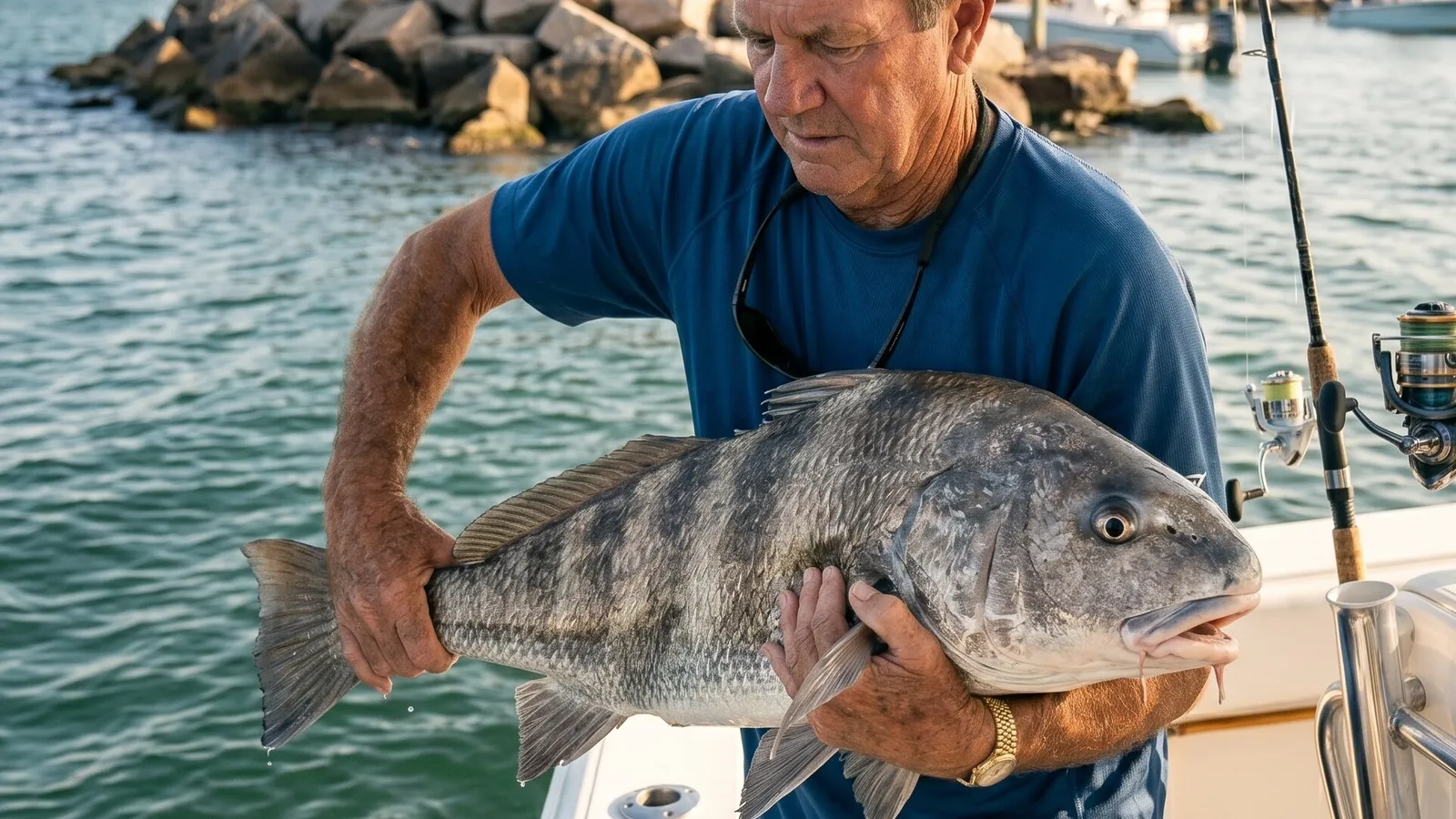
Flounder Fishing in Brazosport: Gigging, Regulations, and When to Fish
Southern flounder are one of the most valued species in the Brazosport bay system — and the most misunderstood in terms of regulations.
Every fall, anglers show up at Quintana or Surfside and discover that flounder season closed while they were making plans. This page covers what you actually need to know: when the fish are here, when and why the closure applies, how gigging works, and where to focus your efforts during the open season.
Southern Flounder in the Brazosport System
The flounder population in the Texas Gulf Coast bays is southern flounder (Paralichthys lethostigma), a species that spends most of its life in the bay system and makes predictable seasonal migrations anglers have fished for generations. Brazosport sits at the intersection of the Brazos River, Chocolate Bay, and a network of back bays that provide exactly the transitional habitat — grass beds, soft muddy substrate, shell reef edges — that flounder prefer.
How flounder feed: Flounder are ambush predators. They lie flat on the bottom, often partially buried, and strike upward at passing baitfish. This biology explains both where you find them (bottom structure, channel drop-offs, tidal current edges) and how gigging works — the fish hold motionless, making them locatable by light.
Size and weight: A slot-legal flounder in Texas runs between 14 and 22 inches. Fish above 22 inches are large, and catches in the 3–5 pound class are common in Brazosport bays. The Texas state record exceeds 13 pounds, though fish that size are exceptionally rare.
Flounder Gigging: What It Is and How It Works
Gigging is a technique with deep roots in Texas coastal fishing culture. It is legal during the open flounder season and is the most efficient way to locate and harvest flounder in shallow bay environments at night.
The basic setup: A gig is a multi-pronged spear on a long pole. Anglers wade or drift slowly through shallow water (1–4 feet deep) using a bright light — traditionally a pressure lantern, now more commonly a powerful LED flood mounted on the bow of a flat-bottomed boat — to illuminate the bottom. Flounder reveal themselves by their outline: the distinctive oval shape, two eyes on one side, and the lateral line visible through shallow water.
How to identify a flounder on the bottom: Look for a flat, leaf-shaped fish lying flush with the substrate. The top side ranges from olive to dark brown with irregular spots, eye side up. In sand they look like a shadow; on shell or grass they are harder to spot and require slow, careful movement with the light.
The gig strike: Position the gig directly over the fish, then drive it straight down with authority. A hesitant strike misses. The tines hold the fish while you bring it up — handle gigged fish carefully, they are still very much alive.
Equipment: Entry-level gig poles run $20–$40 and quality matters little. The light matters more: a boat-mounted LED flood of 5,000+ lumens makes fish visible from the bow. Wading with a handheld light and gig is also legal and popular.
Wading safety: Gigging at night in shallow water is low-risk but requires attention. Stingrays rest in the same shallow habitat as flounder — the shuffle-step prevents most encounters. Wear wading boots, not flip flops, and keep a phone in a waterproof case.
The Closure: November 1 Through December 14
Texas Parks and Wildlife Department closes the flounder season every year from November 1 through December 14. This is not a bag-limit adjustment or a gear restriction. It is a complete prohibition on taking flounder, by any method, during this period.
Why the closure exists: Southern flounder make a fall spawning migration from the bay system to the Gulf. In late October and November, fish that fed in the back bays all summer move toward Gulf passes in large numbers. This migration is visible as a late-season concentration near passes and jetties — and it is the most vulnerable moment in the flounder’s life cycle. TPWD implemented the closure to protect spawning fish when they are most concentrated and most susceptible to harvest pressure.
The flounder population on the Texas coast declined substantially from the 1990s through the 2010s. The closure is part of a suite of management measures designed to let the population recover — and surveys show improvement since it was implemented, though the stock remains below historical abundance.
What this means for anglers: If you are planning a flounder-specific trip to Brazosport, do not plan it in November or the first two weeks of December. The fish will be there — more than usual near the passes during the peak migration — but you cannot legally take them. If you arrive at Quintana in early November and watch fish stacking near the jetty, that is the closure doing exactly what it was designed to do.
Bag Limits and Size Limits During Open Season
- Bag limit5 flounder per person per day
- Minimum size14 inches total length
- ClosureNovember 1 – December 14 (all methods)
Flounder under 14 inches are common in shallow bay habitat, particularly early in the season. Practice measuring before you keep — a 13-inch flounder looks close to legal to an untrained eye, and TPWD wardens actively patrol popular flounder areas near jetties and passes. No slot upper limit applies: legal fish go from 14 inches up, so the largest flounder can be kept. During the open season, gigging at night with a gig or spear is legal with no additional license beyond the standard Texas saltwater endorsement.
Rod-and-Line Flounder Fishing
Gigging gets the most attention, but rod-and-line flounder fishing is productive throughout the open season and is the primary method during daylight hours. The best Brazosport locations:
- Tidal cuts and passes: Mitchell’s Cut and the Quintana Island passes are prime on a moving tide — fish the drop-off on the down-current side.
- Brazos River mouth: flounder use the soft substrate as ambush positions; wade the edges in knee-deep water.
- Surfside Jetty base: the riprap base holds flounder feeding on baitfish moving in and out of the channel.
- Grass-bed edges: the sand-to-grass transition around Chocolate Bay and Christmas Bay holds summer flounder feeding on shrimp and small mullet.
Effective rigs: A Carolina rig with a 1/4–1/2 oz egg sinker above a swivel, 12–18 inches of fluorocarbon leader, and a live mud minnow or finger mullet on a 1/0–2/0 kahle hook, fished slow and close to the bottom. Flounder strikes are a tap-and-hold — the fish takes the bait and pins it before swallowing, so let it run a few seconds before setting the hook. Soft-plastic paddle tails on a 1/8–1/4 oz jig head also produce when worked slowly along bottom structure.
Water temperature: Flounder feed actively between 60–78°F. Summer’s hottest months slow midday feeding — early morning and evening are better. Fall, as water cools from summer highs, triggers aggressive feeding before the spawning migration.
Seasonal Flounder Calendar for Brazosport
| Period | Status | Notes |
|---|---|---|
| January – February | Open | Post-closure. Winter fish are offshore or near passes. Slow fishing. |
| March – April | Open | Fish begin returning to the bay as water warms. Improving. |
| May – June | Open | Active bay fishing. Grass-bed edges productive. |
| July – August | Open | Summer heat slows midday action. Early/late hours best. |
| September – October | Open | Best rod-and-line season. Fall feeding before migration begins. |
| November 1 – December 14 | Closed | Full closure. No flounder by any method. |
| December 15 onward | Open | Fish that completed the spawn begin returning to bays. Slow for several weeks. |
All regulations are subject to change. Confirm current rules at tpwd.texas.gov before fishing.