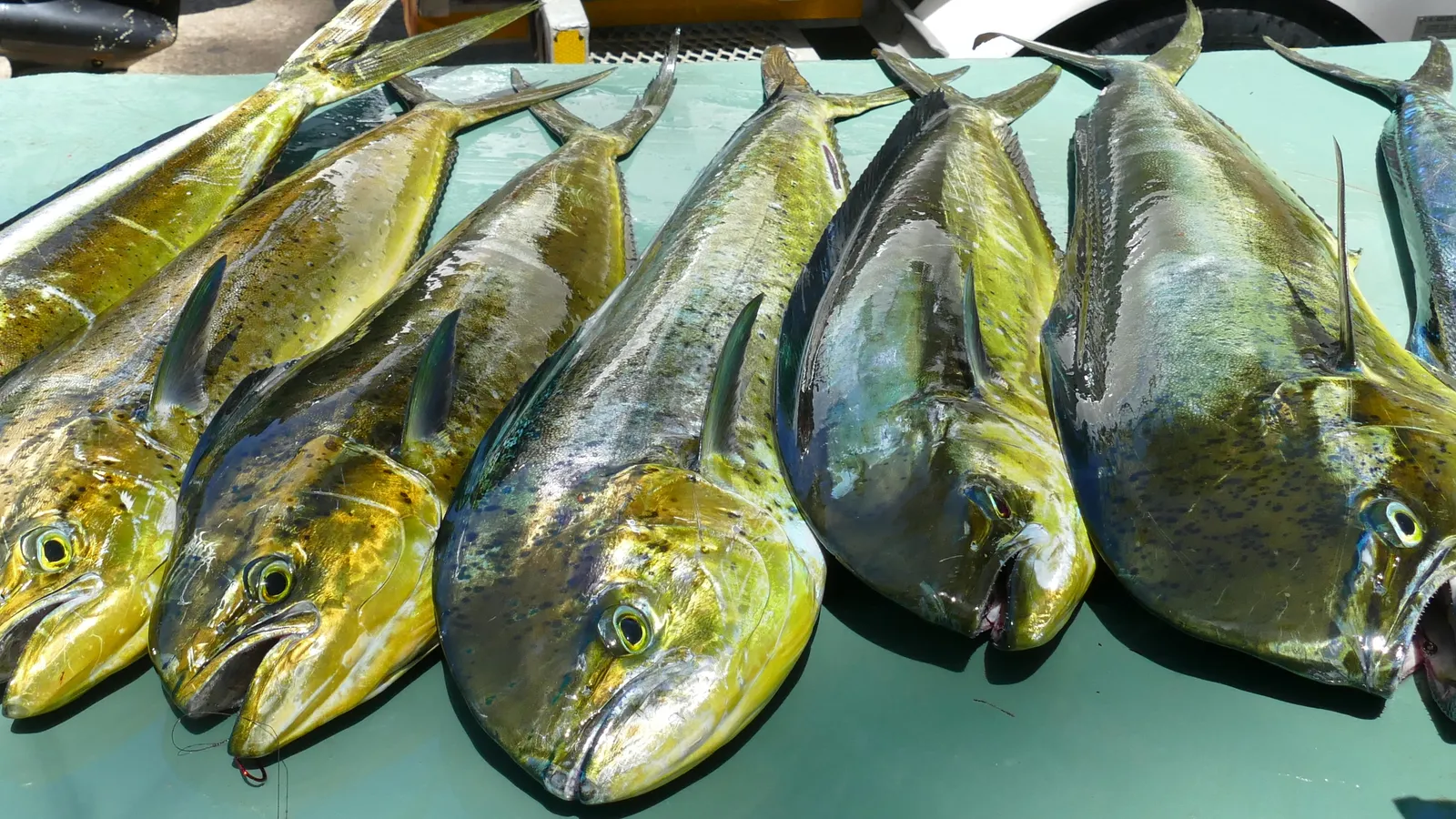
Photo: Bernard Dupont / CC BY-SA 2.0 via Wikimedia Commons
Offshore Fishing in Freeport, TX
Mahi-mahi, wahoo, amberjack, blackfin tuna, and billfish: the blue-water slate that a full-day offshore charter out of Freeport puts within reach.
Red snapper gets the headlines, but it is only one fish on Freeport's offshore card. Past the reefs and out toward the blue water, the Brazosport grounds hold a full slate of pelagic and reef species, and a full-day charter is how most anglers reach them.
What offshore fish can you catch off Freeport?
Beyond red snapper, Freeport's offshore grounds hold mahi-mahi, wahoo, amberjack, blackfin tuna, and king mackerel, plus billfish (sailfish and marlin) that are typically tagged and released rather than kept. Mahi (also called dorado or dolphinfish) are the bright, acrobatic summer prize; wahoo run fast and hit trolled baits hard; amberjack are the brawlers that hold deep over structure. When the federal for-hire red snapper season is open, June through October, snapper rounds out the box on the same trip.
How far offshore do you have to run from Freeport?
The Gulf deepens quickly off Brazosport, which is one reason Freeport is a strong port for offshore trips: the run is shorter here than from many ports further north. Reefs and wrecks holding amberjack and bottom fish are reachable on a shorter run; the blue water that draws mahi, wahoo, tuna, and billfish generally sits around 30 miles out or more, where color breaks and current edges concentrate bait and predators. For how that shorter run compares to fishing out of Galveston, see our Freeport vs. Galveston guide.
Two well-known pieces of structure anchor the nearer offshore grounds: the Freeport Liberty Ship, a sunken vessel resting in roughly 100 feet of water that has become productive reef, and George Vancouver Reef, which holds snapper, grouper, and amberjack over structure. Both are charter-only runs; see the full fishing spots guide for where they sit and what they hold.
When is the best time for offshore fishing in Freeport?
Summer into fall is the prime window for mahi-mahi and the rest of the pelagics, when warm water and floating weed lines push them within range of a day trip. Amberjack are available over deep structure for much of the year, but federal regulators close the amberjack fishery for stretches of the calendar, so the open dates move; always confirm the current closure status with your captain before you book. For the month-by-month picture across every species, see the seasons calendar.
What techniques do offshore charters use?
The method follows the target. For pelagics like wahoo, tuna, and mahi, captains pull a trolling spread of skirted baits and lures run at speed behind the boat to cover water and trigger reaction strikes. For amberjack and other reef fish, the boat sets up over a wreck or reef and crews drop vertical jigs or live bait straight down to the structure, then muscle the fish away from the snags. Mahi in particular reward a sharp eye: they school under weed lines, floating debris, and current rips, so crews idle along those edges and pitch baits to fish they can see.
What are the rules and limits for offshore species?
Offshore limits vary by species: mahi-mahi, wahoo, amberjack, and the tunas each carry their own bag and size rules, and several are set in federal waters rather than by the state. Billfish are typically catch-and-release. The single most important rule to know is that anglers must release reef fish that show signs of barotrauma using a venting tool or a descending device in federal Gulf waters under the DESCEND Act, and that circle hooks are required when fishing for reef fish with natural bait. Because these numbers shift by species and season, confirm current limits with your captain (they fish the rules daily) and cross-check the latest figures with TPWD before your trip.
How do you book an offshore charter from Freeport?
Offshore is a full-day commitment. Expect roughly $1,200 – $1,700 per boat for an eight-hour offshore trip carrying up to 4 anglers (about $60 – $75 per additional angler), with rods, reels, bait, tackle, ice, and dockside fish cleaning typically included. Summer dates fill fast, so book weeks ahead for June through August, when the offshore calendar and the red snapper season collide.
Every angler aged 17 or older needs their own Texas fishing license with a saltwater endorsement, even aboard a fully licensed charter; the captain's permit does not cover passengers. Buy yours from TPWD before you reach the dock. For the full pre-trip checklist see plan your trip, and for the license details read our Texas fishing license guide.
All regulations are subject to change and many offshore species are managed in federal waters. See the full Brazosport regulations table, and confirm current rules at tpwd.texas.gov and noaa.gov, or with your captain, before fishing.
Common Questions.
How long is a full-day offshore trip out of Freeport?
Plan on 10 to 12 hours dock-to-dock. Blue-water trips leave before sunrise, run an hour or more to reach the deep water, fish through midday, and return mid-to-late afternoon. Bottom and reef trips for amberjack and snapper can be shorter. The early start matters: the Gulf is usually calmest at dawn and builds chop as the sea breeze fills in, so the best fishing is often over before noon.
Will I get seasick, and what helps?
Offshore swells affect even seasoned anglers, and a full day in blue water is rougher than the bays. If you are prone to motion sickness, take a non-drowsy remedy the night before and again the morning of the trip rather than waiting until you feel ill. Eat a light breakfast, stay hydrated, watch the horizon, and stay in the fresh air on deck. Picking a calm-forecast day is the single biggest factor.
Do I need to bring my own rods and tackle?
No. Freeport offshore charters supply the heavy trolling and bottom gear, rigs, bait, and ice, which is part of why a guided trip is the practical way to fish blue water; the tackle for wahoo or amberjack is specialized and expensive. Bring sun protection, polarized sunglasses, soft-soled shoes, food and drinks, and a cooler for your cleaned fish. Confirm exactly what the boat provides when you book.
What can I actually keep on a mixed-bag offshore trip?
Each species on board carries its own federal or state limit and size minimum, and several are subject to seasonal closures, so the legal catch changes trip to trip. Reef fish such as red snapper and amberjack must stay whole until you are off the water so an officer can verify size. Your captain tracks the open seasons and limits for every species you target and will tell you what stays and what goes back before you bend a rod.