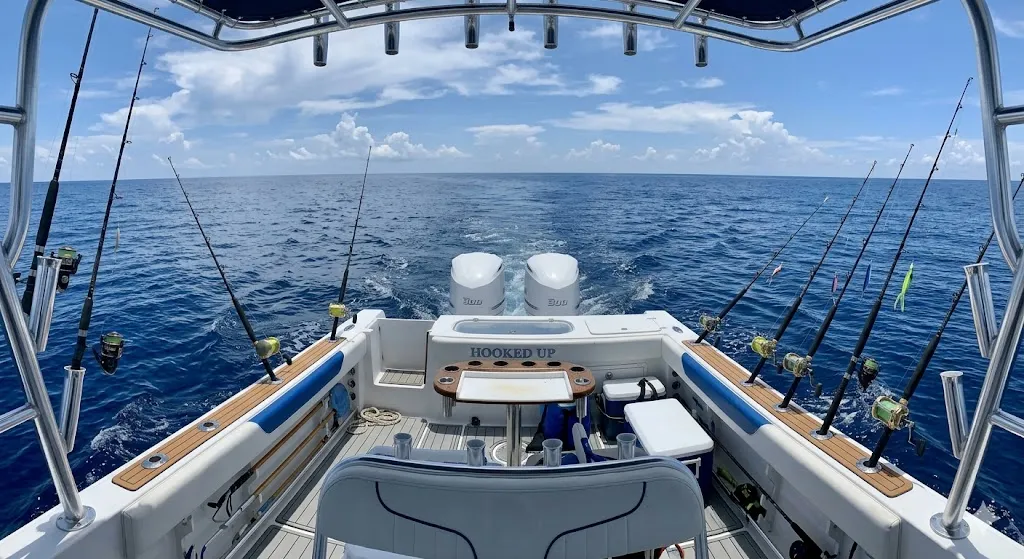
Freeport vs. Galveston Fishing: Which Is Better?
Freeport and Galveston both offer Gulf Coast fishing, but they're not the same. Compare offshore access, inshore species, charter prices, and crowds.
Freeport and Galveston are both legitimate Gulf Coast fishing destinations, but they’re set up differently, and the better choice depends entirely on what you’re trying to do. For serious offshore fishing, Freeport has a structural advantage that shows up on every trip. For a first-time family outing with more infrastructure around it, Galveston has its place. Here’s how the two actually compare. Fishing the island instead? Check the live Galveston fishing report for today’s tides, seas, and forecast.
How far is Freeport from Houston compared to Galveston?
Galveston is about 50 miles from downtown Houston and Freeport is about 70 miles, so both sit within easy reach but the drive differs in character more than in distance. Both ports are reachable in roughly an hour to an hour and a quarter, yet the experience of getting there is different.
Galveston is roughly 50 miles southeast of downtown Houston on I-45, about an hour in normal traffic, but the Galveston Causeway is a known bottleneck on holiday weekends, and the island itself gets heavy tourist traffic year-round. Parking near the marinas can be a project on busy days.
Freeport is roughly 70 miles south via Highway 288, about 1 hour and 15 minutes from central Houston. SH-288 runs cleaner than I-45 for most of the trip, and the Brazosport area sees a fraction of the tourist congestion. If you’re trailering a boat or hauling a group, the Freeport run is often easier in practice.
One thing worth knowing: Freeport and Galveston are only about 45 minutes apart from each other along Bluewater Highway (FM 3005). You can fish out of Freeport and drive to Galveston for dinner.
Is Freeport or Galveston better for offshore fishing?
Freeport is the clearly stronger choice for offshore fishing, and it’s the reason experienced Texas offshore anglers consistently favor it: the port’s geography puts deep-water structure within a 30-to-45-minute run, where Galveston requires 40 to 50 miles of open-water running to reach comparable depths. That short run is what makes the Freeport red snapper and offshore fishery so productive.
The Freeport Ship Channel is a deep-draft commercial port with a direct, protected route to open water. From Freeport, a charter boat can be on productive snapper structure within 30 to 45 minutes of leaving the dock. The Liberty Shipwreck sits about 12 miles out in roughly 100 feet of water. The Flower Garden Banks National Marine Sanctuary, the only coral reef system on the US Gulf north of Florida, is accessible from Freeport on an overnight trip in a way it simply isn’t from Galveston.
From Galveston, reaching comparable offshore depths requires a longer run. Getting to 100-foot-plus water from the Galveston jetties typically means 40 to 50 miles or more of open-water running before you’re in prime snapper and grouper territory. On a standard 8-hour charter, that translates to significantly more time running and less time fishing.
The Texas fishing community consistently makes the same call. On 2coolfishing.com, a discussion about where to home-port an offshore boat drew a consensus: “Freeport offers better access to deeper waters compared to Galveston… huge fuel savings over the long haul getting to deeper water.” Another member put it more directly: “Freeport all the way — if you want to do all the things Galveston has to offer, just drive there. Takes 45 minutes down Bluewater Highway.”
Is Freeport less crowded than Galveston for inshore fishing?
Yes. The Brazosport bay system south of Freeport sees a fraction of the recreational pressure that Galveston Bay absorbs, so the inshore fishing is noticeably less crowded. Both ports offer quality inshore fishing for redfish, speckled trout, flounder, and black drum; the difference is primarily one of size and pressure. Those inshore species each carry their own state rules, like the flounder size limits, gigging rules, and November closure.
Galveston Bay is one of the largest bay systems in Texas, roughly 600 square miles of water connecting East Bay, Trinity Bay, West Bay, and Galveston Bay proper. There’s a lot of water to cover, which means booking flexibility and diverse wade fishing options. The trade-off: it’s one of the most heavily fished bay systems in the state. Weekends see significant boat traffic, and popular spots near the causeway and jetties get worked hard year-round.
The Brazosport bay system (Freeport’s inshore fishery) is a different experience. Christmas Bay, Chocolate Bay, Cold Pass, and Churchill Bayou see a fraction of the recreational pressure of Galveston Bay. The Brazos River mouth is a unique inshore feature: the seasonal freshwater outflow concentrates baitfish and pushes predators like redfish and flounder into predictable staging areas. Sight fishing for redfish on shell flats in Drum Bay or the back marshes off the ICW near Amigo Lane is a genuine local experience, not something you’ll replicate in a crowded bay system.
For specifically targeting redfish on the flats or running light-tackle inshore trips in less-pressured water, the Brazosport system has a real advantage.
Galveston Bay Inshore
- ~600 sq miles of fishable water
- Redfish, speckled trout, flounder, black drum
- Heavy recreational pressure, especially weekends
- Strong wade fishing variety — East Bay, West Bay flats
- More charter operators and booking options
- Party boat options for budget-conscious groups
Brazosport Bay Inshore
- Christmas Bay, Chocolate Bay, Cold Pass, Drum Bay
- Same target species, lighter boat traffic
- Brazos River mouth concentrates bait and predators
- Shell flats in Drum Bay and Churchill Bayou for sight fishing
- ICW edges with less pressure than Galveston equivalents
- Flounder gigging charters run through Christmas Bay complex
Are Freeport charters cheaper than Galveston?
Freeport and Galveston charters are priced comparably, so neither is meaningfully cheaper on the sticker. Both markets are competitive, and the price gap is smaller than many expect. The Freeport ranges below come from current Freeport / Brazosport market research; the real difference shows up in offshore trips, where Freeport’s shorter run time means you get more fishing per dollar.
| Trip Type | Freeport | Galveston |
|---|---|---|
| Inshore half-day (4 hrs, private boat) | $350 – $500 | comparable market rates |
| Offshore full-day (8 hrs, private charter) | $1,200 – $1,700 | similar band; longer runs add a fuel surcharge |
| Party boat / open boat (per person) | per-seat option for budget groups | wider per-seat range, more operators |
The inshore price difference is minimal. Where Freeport pulls ahead in value is the offshore calculation: on an 8-hour offshore charter out of Galveston, you may spend 2 to 3 hours of that time simply running to and from productive water. Out of Freeport, that run is 45 minutes each way. Same charter price, significantly more time fishing.
Galveston does offer more party boat options: the open-boat model is well established there, with per-person pricing that works well for groups who want a budget offshore experience.
What Freeport Does Better
- Offshore access. Shorter runs to snapper, grouper, and amberjack structure. More fishing per charter hour.
- Fuel and time savings. Captains and private boaters both benefit from Freeport’s proximity to deep water.
- Less inshore pressure. The Brazosport bay system is genuinely less crowded than Galveston Bay.
- Unique structure. The Liberty Shipwreck, East Bank reef system, Buccaneer Field, and Flower Garden Banks access are all Freeport advantages.
- The Brazos River mouth. A distinct inshore feature with no Galveston equivalent.
- Quieter experience. Fewer crowds on the water and at the docks, especially on weekends.
What Galveston Does Better
- Charter fleet size. More operators means more availability and shorter booking lead times, especially for last-minute trips.
- Party boat access. Budget-friendly open-boat offshore fishing is better established in Galveston.
- Tourist infrastructure. Hotels, restaurants, bars, and activities on the island. Easier to make a full trip out of it for a group that wants more than just fishing.
- Name recognition. Easier to research captains — more reviews, more online presence, more history to draw from.
- Galveston Bay size. If wade fishing variety across a large system is the goal, Galveston Bay’s scale gives you more options.
The Verdict by Trip Type
There’s no universal winner here, but the right call is usually clear once you know what you’re fishing for.
| Trip Goal | Recommended Port |
|---|---|
| Offshore red snapper or grouper | Freeport — shorter run, more time on structure |
| Overnight offshore (tuna, Flower Garden Banks) | Freeport — the only practical choice |
| Inshore redfish or speckled trout (light pressure) | Freeport — less crowded bays |
| First family charter, casual experience | Either — Galveston has more infrastructure around it |
| Budget offshore (party boat, per-person pricing) | Galveston — better open-boat options |
| Maximum booking flexibility | Galveston — larger charter fleet |
If you’re serious about offshore fishing and a red snapper limit is the goal, make the drive to Freeport. You’ll spend more time fishing and less time running, and the Freeport charter fleet is set up specifically for that kind of trip. If you want a fishing-adjacent beach weekend for a group with mixed interests, Galveston’s infrastructure makes that easier.
Go deeper on the comparison
This overview covers the headline differences. Two companion guides go further on the questions that decide most trips:
- Freeport vs Galveston offshore fishing — run times to productive red snapper, depth by distance, the fuel-and-time math on an 8-hour charter, and sea-condition exposure on the longer Galveston run.
- Charter prices, crowds, and when to book — what charters actually cost out of each port, where the crowds really are, and how to time your trip to beat them.
Ready to book a Freeport offshore charter?
Find a Freeport Charter Captain
What to Expect on a Charter Trip
Frequently Asked Questions.
Can you do a day trip to both Galveston and Freeport?
Yes. Freeport and Galveston are roughly 45 minutes apart via Bluewater Highway (FM 3005) along the Texas coast. It's entirely practical to fish out of Freeport in the morning and drive to Galveston for dinner. The two ports are not far from each other even though they fish quite differently.
What fish can you catch offshore out of Freeport?
Red snapper, greater amberjack, grouper, kingfish, and cobia are the primary offshore targets from Freeport. Yellowfin and blackfin tuna are available on longer runs. The Flower Garden Banks, the only coral reef on the US Gulf north of Florida, is accessible on overnight Freeport charters and holds reef fish, sharks, and pelagics year-round.
For a first-time Houston angler, which port is the simpler choice?
If the goal is offshore fish, Freeport is the simpler day: a shorter run to deep water means more fishing and less time on the horizon getting seasick. If you want a quick, casual inshore morning closest to Houston, Galveston's shorter drive wins. Pick the target species first, then the port that reaches it fastest, rather than defaulting to whichever name you know.
Do Freeport and Galveston catch different inshore species?
The headline inshore species are the same in both, redfish, speckled trout, flounder, and black drum, because both sit on the same upper Texas coast. The difference is pressure, not the fish: the Brazosport bays south of Freeport are far less crowded than the Galveston Bay complex, so the same species see fewer boats and less fished-over water.
Does the better port change with the season?
Somewhat. Freeport's offshore edge matters most in red snapper season (the federal for-hire window roughly June through October) and through the summer pelagic run, when the shorter run to blue water pays off. Inshore fishing holds up year-round at both ports, with fall the standout for redfish and trout. If you are chasing a specific season, check the month-by-month calendar before booking.