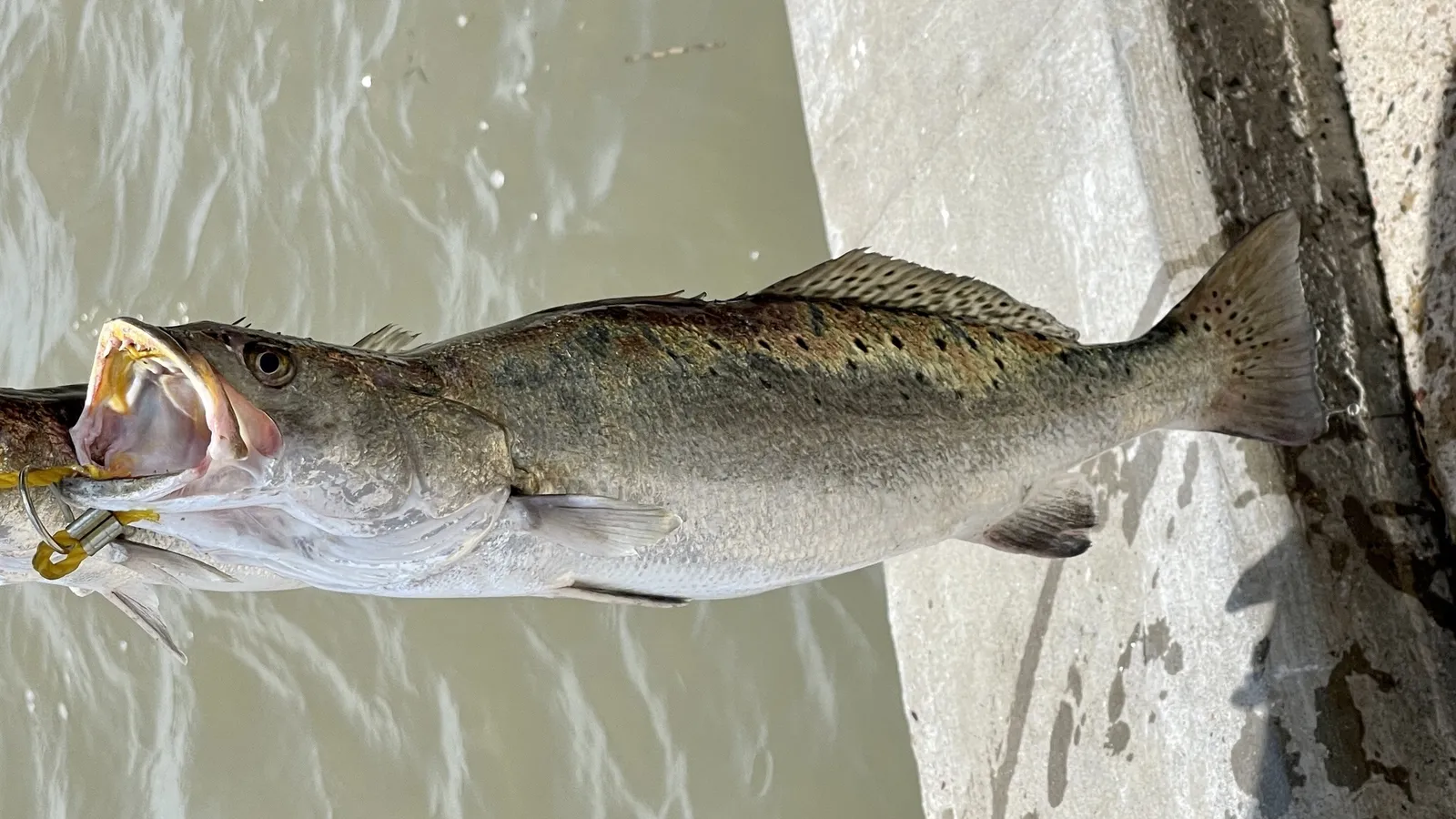
Speckled Trout Fishing in Freeport, TX
The most popular inshore target in Texas, and the most beginner-friendly species in the Brazosport bays.
Speckled trout (spotted seatrout) respond to artificial lures, fight hard for their size, and eat well. Year-round availability and predictable behavior make specks the go-to species for half-day inshore charters.
When Speckled Trout Are Seen Near Freeport
Research-grade iNaturalist observations by month within 75 km of Freeport — a proxy for when the species is active and around, not a catch count.
Loading the seasonal pattern…
What is the speckled trout limit in Texas?
The Texas spotted seatrout bag limit is 3 fish per angler per day within a 15-20 inch slot limit. Fish under 15 inches or over 20 inches must be released. One exception: anglers may keep 1 fish over 28 inches per day with a required TPWD Spotted Seatrout Tag, included with all Texas saltwater license packages.
The slot limit protects the larger, older females that produce the most eggs.
When is the best time to catch speckled trout near Freeport?
Speckled trout are active year-round in the Brazosport area, with peak fishing in May, September, and October. May produces pre-spawn fish feeding aggressively in shallow water. The fall bite (September-October) combines cooling water, migrating baitfish, and concentrated schools for the best topwater action of the year.
Winter months produce oversized "Gator Trout" for experienced anglers working deep bay structure on slow presentations. Summer fishing is productive early and late in the day when water temperatures are lower in the bays. The full month-by-month seasons calendar shows how specks fit alongside the rest of the Brazosport catch.
Where do speckled trout hold around Freeport?
Speckled trout occupy shallow inshore habitats: seagrass flats, sandy potholes, oyster reefs, and bay edges near structure. In the Brazosport area, productive trout water includes the back lakes and flats of Christmas Bay, the grass edges along the ICW, and the shallow bay systems between Freeport and Surfside Beach.
Trout tend to stack near drop-offs and ledges in cooler months. In warm weather, find them on grass flats during low-light periods and near deeper channels midday.
On the jetties, the biggest trout sit right on the drop-off where the rock meets deeper water, and they will hold there spring through fall. In open bay water, look for a slick: a smooth, oily patch on the surface that feeding trout leave behind, often smelling faintly of cut grass or watermelon.
What lures work best for speckled trout?
Speckled trout are ideal artificial lure targets. Top-producing presentations in the Brazosport bays:
- Topwater plugs (Heddon Super Spook, MirrOlure She Dog) at dawn and dusk.
- Soft plastic paddle tails on 1/8-1/4 oz jig heads under a popping cork.
- Floating MirrOlure plugs worked with a twitch-pause retrieve.
- Soft plastic shrimp imitations worked slowly along the bottom.
- Spoons over grass flats.
Live shrimp under a popping cork is the most consistent all-conditions approach for beginners. Fish it over 2-4 feet of water on grass flats and let the cork do the work.
At the jetty, a live shrimp under a float will out-fish hardware on a tough day; many trips turn around the moment someone switches from a spoon to live bait. Keep the leader light and do not horse a big trout over the rocks.
Are speckled trout good to eat?
Yes, spotted seatrout are considered one of the best-eating inshore fish in Texas. The white, flaky meat is mild and holds up well to any cooking method. Most Freeport anglers prefer fresh fillets either pan-fried or grilled the same day. Fish within the 15-20 inch slot yield the best table fare.
Redfish make a common co-target on the same inshore trips.
Bag Limits and Size Limits
- Bag limit3 per angler per day
- Size limit15–20 inches (slot); 1 over 28" with a tag
- SeasonOpen year-round
All regulations are subject to change. See the full Brazosport regulations table, and confirm current rules at tpwd.texas.gov before fishing.
Common Questions.
Do I need a special tag to keep a trout over 28 inches?
Yes. To keep one spotted seatrout over 28 inches per day you need the TPWD Spotted Seatrout Tag, included free in every Texas saltwater license package. Without the tag attached, any fish over 28 inches must be released.
How do I catch a Gator Trout, and why are they so hard to land?
A "Gator Trout" is a trophy speck over 25 inches, almost always a big, old female. They feed slowly, so the common mistake is working a lure too fast. Slow twitch-pause presentations with a suspending plug over a winter mud flat or channel edge produce the bite. Most anglers release gators, since the big females carry the most eggs.
What is the most common mistake fishing a popping cork for trout?
Working the cork too hard. Over 2-4 feet of grass, one sharp pop followed by a long pause imitates a shrimp; constant rattling looks unnatural and pushes a school off. Let the cork sit still after each pop, most strikes come during the dead-stop.
Why are my speckled trout mushy by the time I get home?
Speckled trout have soft, delicate flesh that breaks down fast in warm water or on a stringer. Ice them the moment they are caught rather than hanging them over the side, and clean them the same day.
How do you find speckled trout in open water?
Look for slicks and working birds. The fresher and smaller a slick is, the closer the fish. Cast down-current of it and keep moving until you find active fish.
Recent Sightings Near Freeport
Loading community sightings…