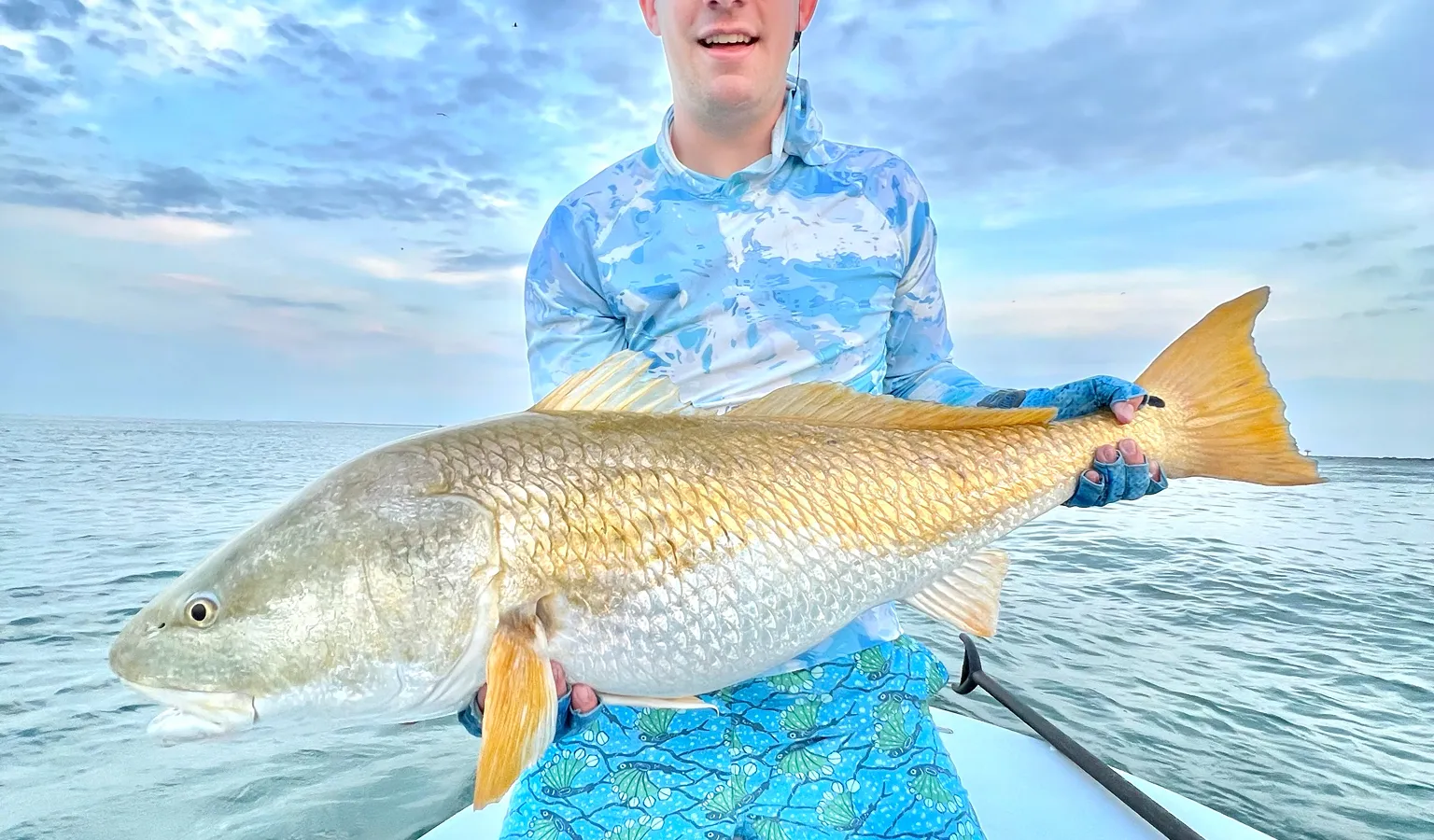
Photo: Reizo Knapp / CC BY via iNaturalist
Redfish in Freeport, TX: the Texas Limit, Slot and Where They Bite
Redfish are the backbone of inshore fishing around Brazosport: strong, plentiful, and biting in every season.
Redfish Limits at a Glance
- Bag limit3 per angler per day
- Size20–28" slot (1 over 28" with tag)
- SeasonOpen year-round
Source: TPWD red drum limits
Redfish (red drum) are the backbone of inshore fishing in the Brazosport area. They live in the bays, flats, and river mouths year-round, put up a hard fight, and are prized for their firm white meat. The Brazos River mouth and ICW backwaters hold fish in every season, with peak action from August through November.
When Redfish Are Seen Near Freeport
Research-grade iNaturalist observations by month within 75 km of Freeport — a proxy for when the species is active and around, not a catch count.
Loading the seasonal pattern…
What is the redfish limit in Texas?
The Texas red drum bag limit is 3 fish per angler per day within a 20–28 inch slot limit. Fish under 20 inches or over 28 inches must be released immediately. One exception: anglers may keep 1 red drum over 28 inches per day with a required TPWD Red Drum Tag, which is included in all Texas saltwater fishing packages. The slot limit protects both juvenile fish and the large spawning females. A 40-inch bull red on a kayak rod is a Texas bucket-list fish: catch it, photo it, and put it back.
When is the best time to catch redfish in Freeport?
Redfish are available in the Brazosport area year-round. The strongest inshore action runs August through November, when feeding activity peaks ahead of the cooling fall water. Late summer tailing redfish on the shallow flats, visible fins breaking the surface, is one of the most exciting presentations in Texas coastal fishing. Spring fishing picks up in April and May as water temperatures rise. Winter months produce fish but require slower presentations and a focus on deeper bay structure and ICW channel edges.
When is the bull red run in Freeport, and where do the big reds go?
The bull red run peaks in September and October and runs into November, when large adult red drum leave the bays and stage at the Gulf passes to spawn. These are the oversized fish above the 28-inch slot, so they are a catch-photo-release fish unless you are using a Red Drum Tag. During the run, anglers line the jetties at Surfside and Quintana and the deep channels that drain the bays toward the Gulf, where the fish concentrate.
Big reds favor the jetty passes because the outgoing tide carries their eggs back into the marsh nurseries. Fresh cut mullet, a large live mullet, or blue crab on a bottom rig is the standard bait when the run is on. The same fall feed pushes slot reds shallow inside the marsh, so a single tide can give you bulls at the pass and keeper reds on the flats. See the full month-by-month picture for October and November.
Where do redfish live around Freeport?
Redfish hold in the inshore waters around Brazosport: Christmas Bay, Bastrop Bay, Drum Bay, the San Bernard River, the Freeport back-lake marsh, the Intracoastal Waterway flats, and the Brazos River mouth, which turns on after rain flushes baitfish into the bay. Shallow grass flats hold fish in warm months. In cooler weather, target deeper bay channels, oyster reefs, and ICW spoil banks. Redfish school heavily in fall, making October and November particularly productive for multiple hookups.
Reading the water matters more than the spot. On a falling tide, bait gets pulled off the flats into the drains, and reds stack at those ambush points. On a high tide, especially around a full moon, reds push into the flooded grass in inches of water. Watch for a mud boil where a fish kicks off the bottom, or a tail breaking the surface, and cast well ahead of the fish, not into it.
What tackle works for Freeport redfish?
Light to medium spinning tackle (10–20 lb braided line, fluorocarbon leader) is the standard inshore redfish setup. Effective presentations include:
- Gold spoons worked over grass flats.
- Soft plastic paddle tails on 1/4 oz jig heads.
- Topwater plugs at dawn and dusk.
- Live or dead shrimp under a popping cork.
- Cut mullet for soaking on bottom in bayous and river mouths.
Drift fishing with the tide across the flats produces consistent action. Watch for nervous water, birds diving, or tailing fish on shallow grass to find pods.
Over flooded cordgrass and oyster, switch to a weedless-rigged paddle tail so you are not constantly fouling on the grass. After a hard freeze, reds drop into deeper holes near dock pilings and the ICW; slow down and bottom-bounce a soft plastic. A rabbit-fur jig keeps moving in the current even when it is sitting still, which lethargic cold-water fish will eat.
Do I need a special license to keep redfish in Texas?
Yes, a Red Drum Tag is required to keep any red drum over 28 inches (above the slot limit). One tag is included free with every Texas saltwater fishing license package. You must attach the tag to the fish immediately upon landing it. For fish within the 20–28 inch slot, a standard Texas saltwater package covers you, with no additional tag required. Every angler aged 17 or older must hold their own valid Texas fishing license with a saltwater endorsement regardless of vessel type. The full requirements are covered in our Texas fishing license guide. Redfish share the bays with speckled trout, a common co-target on the same inshore trips.
All regulations are subject to change. See the full Brazosport regulations table, and confirm current rules at tpwd.texas.gov before fishing.
Common Questions.
Do I need a special tag to keep a bull redfish over 28 inches?
Yes. A Red Drum Tag is required to keep any red drum over 28 inches, above the slot. One tag is included free with every Texas saltwater fishing package, and it must be attached to the fish immediately upon landing. Slot fish (20–28 inches) need only the standard saltwater package.
Once I use my Red Drum Tag, can I keep another bull red that year?
Not on the regular package. The free Red Drum Tag is good for one oversized red per license year. After that, a Bonus Red Drum Tag is available from TPWD for a second oversized fish; without a valid tag, every red over 28 inches must be released. Most Freeport anglers simply release bulls, which spawn offshore and rarely make good table fare.
Why does my redfish have more than one spot near the tail?
Multiple spots are normal and have no bearing on the size or slot limits. The single tail spot is the classic field mark, but redfish often carry several, and rare fish have a dozen or more. Texas folklore holds that extra spots bring luck; biologically they are just natural variation, not a different species or a regulated trait.
What is the most common mistake fishing the Freeport flats for reds?
Working water that is too deep. In late summer and fall, tailing and cruising reds push into a foot or less of water on the flats, and anglers who stay in the channels miss them. Pole or wade quietly, keep the boat off the fish, and cast well ahead of a moving school rather than into it, which spooks the whole group.
When is the bull red run in Freeport?
The bull red run peaks in September and October and tapers through November. Large adult red drum stage at the Surfside and Quintana jetties and the deep passes to spawn, then move back offshore as the water cools. These oversized fish are above the 20-28 inch slot, so they are catch-and-release unless you tag one with a Red Drum Tag.
Why will not a tailing redfish hit my topwater?
If a red's tail is up, its head is down in the mud feeding, and it often will not come up for a topwater. Switch to a weedless soft plastic and drop it a few feet in front of the fish so it falls into its feeding lane, rather than working a lure across the surface above it.
How do I release an oversized bull red so it survives?
Keep it in the water as much as possible, minimize air time for the photo, and support the fish upright facing into the current until it kicks off on its own. Bulls are the breeding stock of the fishery, so a quick, careful release matters. Reds pulled from deep channels can show barotrauma; if a fish cannot stay upright, get it back down quickly.
Recent Sightings Near Freeport
Loading community sightings…