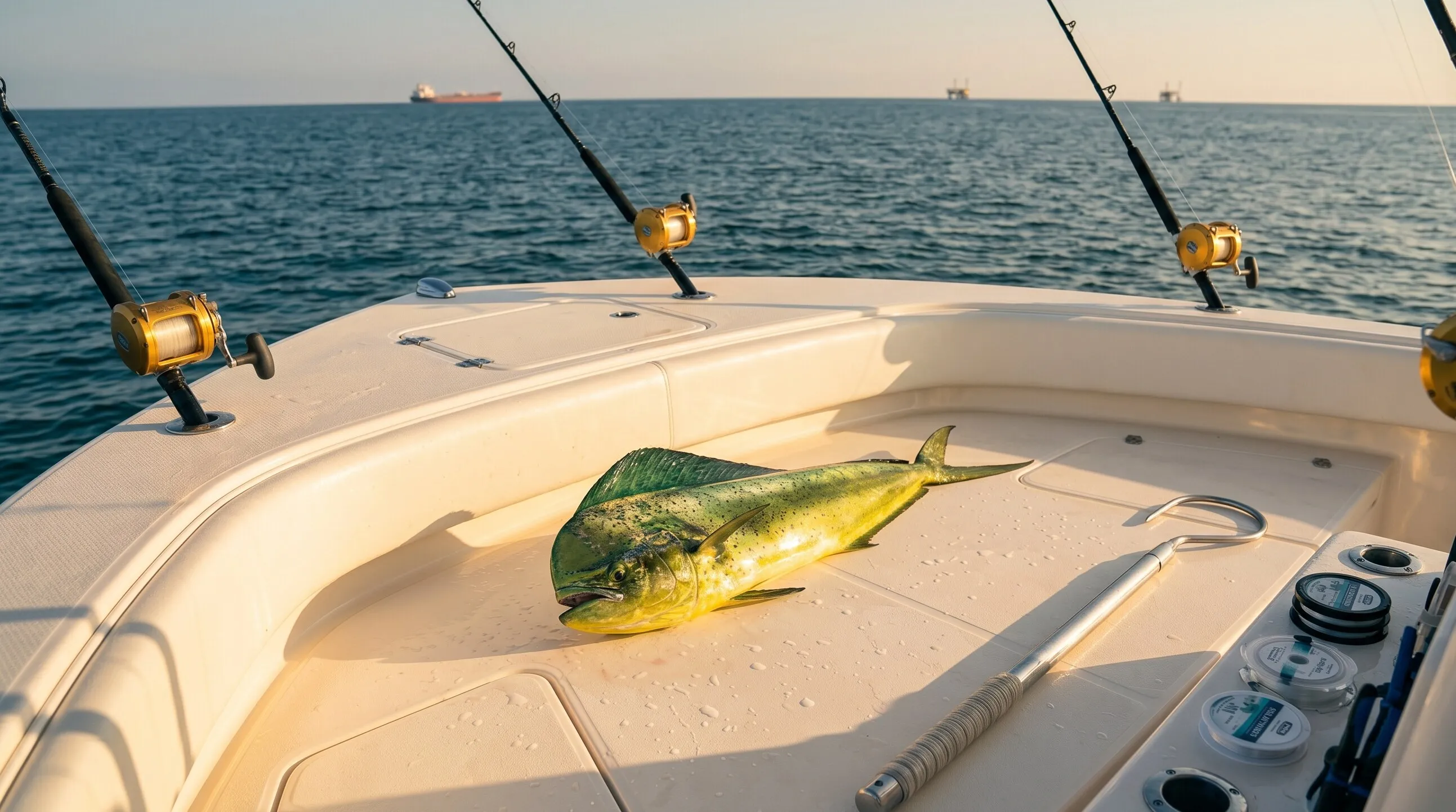
Freeport vs Galveston Offshore: Run Times & Red Snapper
Freeport vs Galveston offshore fishing: run distance to red snapper, depth by distance, the fuel-and-time tradeoff, and sea conditions.
For offshore fishing, and red snapper in particular, the deciding difference between Freeport and Galveston is the run: how far you travel before you are actually on productive structure. Out of Freeport, quality snapper grounds start closer and the trip carries no fuel surcharge on most charters. Out of Galveston, anglers consistently report snapper are tough to find inside 45 miles, which pushes trips longer and adds fuel cost. This page is the detailed version of the offshore section in our Freeport vs Galveston fishing overview.
How far is the run to productive snapper from each port?
The honest answer is that both ports send their best offshore trips out 30 to 50 miles. The difference is where the productive structure begins, and how protected the run out is.
Out of Galveston, the close-in nearshore rigs hold kingfish on a short run. As one 2coolfishing member put it, “Kings are easy enough at the galveston rigs. That is a 14 mile run.” Red snapper are a different story. In the same Bayboat Offshore spots thread, a regular noted snapper “are tough inside of 45 miles from galveston,” and that the closer platforms like Buccaneer (a roughly 29 mile run from the South Jetty) get fished hard and go quiet.
Out of Freeport, the productive snapper structure sits closer. Anglers point to Tall Rock at “only about 32-33 miles out,” and an older thread on fishing the area noted that “within the 35 mile range out of Freeport the red snapper are easy pickins.” Nearshore, the Liberty Shipwreck holds reef fish and cobia at about 12 miles in 100 feet of water, which we cover in the Liberty Ship reef guide.
| Run from port | Galveston | Freeport |
|---|---|---|
| Nearshore (kings, cobia) | ~14 mi to the rigs | ~12 mi to the Liberty Ship |
| Productive red snapper | tough inside ~45 mi | ~30 to 35 mi (Tall Rock) |
| Full-day offshore trips | bluewater runs up to ~100 mi | 8-hr trips run up to ~50 mi |
| Egress to open water | jetties, busy tourist channel | deep-draft Freeport Ship Channel |
For a full breakdown of Galveston’s snapper season, dates, and limits, see our Galveston red snapper season guide.
State waters vs federal waters: where the snapper actually are
Red snapper rules, and where you can keep them, change at the boundary between state and federal water. Texas state waters extend out to 9 nautical miles. Beyond that, the federal Exclusive Economic Zone runs from 9 out to 200 nautical miles.
This matters for the port comparison because the longer-season federal snapper fishery sits offshore in that federal zone. In state waters, TPWD allows 4 red snapper per person daily at a 15-inch minimum, year-round. In federal water, the 2026 federal for-hire season runs June 1 through October 26, the longest on record, at 2 fish per person and a 16-inch minimum.
Both ports have to cross the same 9-mile line to reach federal structure. The point is time and fuel: because productive federal-water snapper sits closer to Freeport, you reach keeper structure with a shorter minimum run and burn less fuel doing it.
The fuel and time math on an 8-hour charter
On a fixed-length offshore charter, every extra mile of running is a mile you are not fishing. This is the core of Freeport’s offshore value, and it shows up two ways.
First, run time. A shorter minimum run to snapper means more lines-in-the-water time on the same 8-hour booking. One Freeport operator sells exactly this, advertising a 33-foot Contender that cruises over 30 mph to get anglers to and from the grounds quickly and maximize fishing time.
Second, fuel surcharges. Freeport’s full-day offshore trips are commonly advertised with no extra fuel charge, including an 8-hour offshore run up to 50 miles and a 10-hour bluewater trip for up to four people with fish cleaning included. Galveston’s longer bluewater outings, by contrast, typically run 10 to 12 hours as far as 100 miles offshore and usually carry a fuel surcharge. Same sticker price band, but more of your money goes to fishing instead of transit.
Sea conditions and the longer run
A longer run is not just slower. It also means more open-water exposure, which is a real safety and comfort factor, especially in smaller boats. The Texas offshore community is blunt about this.
In a thread on running 10 to 30 miles out, one angler described bay boats getting caught by storms 40 to 50 miles out on days that were “forecast almost perfect sea conditions,” with maydays on the radio. Another set a hard personal limit: “anything over 1-2 and less than 5 seconds, I’ll stay in the bay.” Back in the Bayboat offshore thread, another angler recounted running into Freeport in “a solid 3, probably 4-5 seconds,” passing smaller boats that “couldn’t stay on plane.”
The takeaway is not that one port is dangerous and the other is safe. It is that a shorter run keeps you closer to protected water and shortens your exposure window when weather turns. That is a genuine point in Freeport’s favor for offshore days, and it is worth weighing before you book.
Freeport offshore profile
- Productive snapper from ~30-35 mi
- Protected deep-draft ship channel egress
- Most full-day trips list no fuel surcharge
- Shorter run = more fishing time, less exposure
Galveston offshore profile
- Snapper typically beyond ~45 mi
- Larger charter fleet, more availability
- Bluewater trips often carry fuel surcharge
- Longer runs to keeper federal structure
Which port for which offshore trip?
| Offshore goal | Better port | Why |
|---|---|---|
| Red snapper limit on a day trip | Freeport | Shorter minimum run to keeper structure |
| Kingfish or cobia on a short run | Either | Both have nearshore structure inside ~15 mi |
| Overnight bluewater (tuna, Flower Garden Banks) | Freeport | Closer practical access to the Flower Garden Banks sanctuary |
| Lowest fuel cost per trip | Freeport | Shorter run, no surcharge on most listings |
| Maximum date and boat availability | Galveston | Larger fleet, more open slots |
If a red snapper limit is the goal and you want the most rod time for your charter dollar, Freeport is the stronger offshore port. If you need a specific date on short notice and are flexible on run time, Galveston’s larger fleet is the practical pick. Either way, the Freeport charter options are here.
Ready to put the shorter run to work and spend more of your charter on the fish?
Find a Freeport offshore charter →Read the full Freeport vs Galveston comparison →Frequently Asked Questions.
Is Freeport or Galveston closer to red snapper?
Productive red snapper structure sits closer to Freeport. Anglers commonly fish snapper around 30 to 35 miles out of Freeport, while out of Galveston snapper are widely reported to be tough to find inside about 45 miles. Both ports cross the same 9-nautical-mile state-to-federal boundary to reach the long-season federal fishery.
How long is the offshore run from Freeport?
Freeport's full-day offshore charters commonly run up to about 50 miles, with productive snapper structure starting around 30 to 35 miles out and nearshore reef fish as close as 12 miles. The Freeport Ship Channel provides a protected, deep-draft route to open water.
Do Galveston offshore charters charge a fuel surcharge?
Galveston's longer bluewater trips, which can run 10 to 12 hours and as far as 100 miles offshore, usually carry a fuel surcharge. Many Freeport full-day offshore charters advertise no extra fuel charge. Always confirm with the individual captain before booking.
What is the difference between state and federal waters for red snapper in Texas?
Texas state waters extend to 9 nautical miles and allow 4 red snapper per person daily at a 15-inch minimum, year-round. Federal waters run from 9 to 200 nautical miles, where the 2026 for-hire season runs June 1 to October 26 at 2 fish per person and a 16-inch minimum. Only a federally permitted captain can fish the federal season.
Is the offshore run rougher out of Galveston than Freeport?
Neither port is inherently unsafe, but a longer run means more open-water exposure. Because Freeport's productive structure starts closer, anglers spend less time far from protected water, which shortens the exposure window if weather turns. Smaller boats especially should watch the forecast and sea state regardless of port.
Can you fish the Flower Garden Banks from Freeport?
Yes. The Flower Garden Banks National Marine Sanctuary, the only coral reef system on the US Gulf north of Florida, is reachable from Freeport on an overnight offshore trip in a way that is not practical from Galveston. These are long-range trips that require a well-equipped boat and good weather.